


Last year, I asked my aunt for advice about studying. She had recently completed her master’s degree at Cambridge, and I was curious about how she managed the workload without constantly feeling exhausted or spending every waking hour with her books.
I expected complicated techniques and some kind of secret productivity hack.
Instead, her advice was surprisingly simple: treat studying seriously when it’s time to work, and completely disconnect when it’s time to rest.
I started applying her approach to my own studies, and it completely changed the way I work.
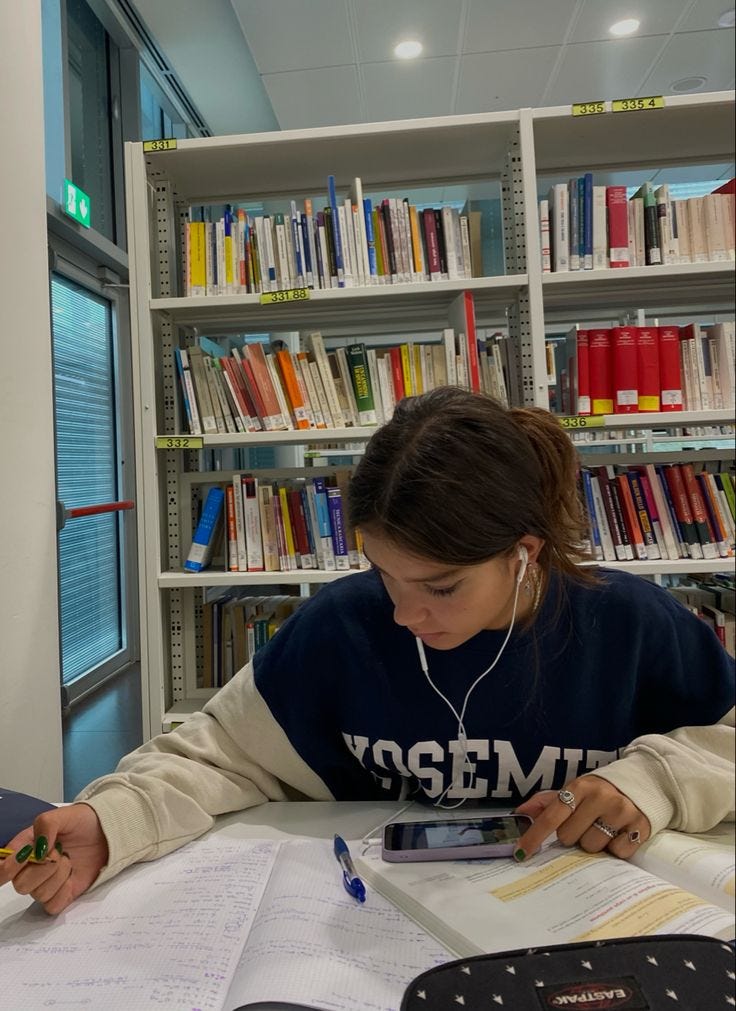
1. Stop Studying All Day — Start Treating It Like a Job
One of the first things my aunt told me was about the structure of Cambridge’s academic terms.
With relatively short, intensive terms, students have to make their study time count. Rather than endlessly stretching studying across the entire day, she approached it more like a full-time job.
Her basic mindset was:
When it’s work time, work. When it’s finished, stop.
I used to spend three or four hours sitting at my desk, reading through notes, highlighting things, checking my phone, and convincing myself I was being productive.
But at the end of those hours, I often remembered surprisingly little.
So I tried something different: 9 AM to 5 PM became my “office hours.”
During that period, studying was the priority. I planned what I needed to accomplish and focused on actually learning rather than simply sitting with a textbook open.
Then, at 5 PM, I stopped.
No guilt. No “I should probably study for another two hours.” I could exercise, watch something, see friends, play games, or work on hobbies.
That clear boundary made studying feel much more manageable.
2. Stop Rereading — Test Yourself Instead
Another lesson that completely changed my approach was the importance of active recall and past papers.
Before this, I spent a lot of time rereading notes. It felt productive because I recognized the information while looking at it.
The problem?
Recognizing something isn’t the same as being able to remember it during an exam.
Instead, I started using past papers as a way to test what I actually knew.
I would go through questions, attempt to answer them without looking at my notes, and then compare my answers with the correct material.
I also started doing active recall by closing my notes and writing down everything I could remember about a topic.
Then I would check my notes and identify the gaps.
Those gaps became my next study targets.
This was much more uncomfortable than simply rereading.
And that’s exactly why it worked.
Instead of constantly giving myself the feeling that I understood the material, I was forcing my brain to retrieve it.
3. Separate Your Work From Your Rest
This was probably the biggest lesson I took from my aunt.
She didn’t try to study at maximum intensity every single day.
Instead, she created a strict separation between work and recovery.
When it was a study day, she took the work seriously. She didn’t spend half the day procrastinating and then attempt to compensate with an all-nighter.
But when it was time to rest, she actually rested.
No feeling guilty for watching a movie.
No thinking about unfinished assignments every five minutes.
No convincing herself that she should be studying while trying to relax.
That distinction helped her avoid the cycle I had fallen into:
Procrastinate → panic → cram all night → sleep badly → feel exhausted → procrastinate again.
Rest isn’t the enemy of productivity.
If anything, proper recovery makes focused studying possible in the first place.
4. Work Smarter Instead of Constantly Working Longer
The biggest change wasn’t that I suddenly started studying eight hours every day.
It was that I became much more intentional about how I used my study time.
Instead of measuring productivity by how long I sat at my desk, I started measuring it by what I could actually remember and apply.
Instead of rereading the same chapter five times, I tested myself.
Instead of studying until midnight because I felt guilty, I gave myself a clear stopping point.
And instead of treating rest as something I had to “earn,” I treated it as part of the system.
That change in mindset made it much easier to stay consistent.
What I Took Away From the Cambridge Approach
There isn’t a magical “Cambridge method” that guarantees perfect grades.
But the principles my aunt shared with me completely changed my approach to studying:
Focus intensely when you’re working. Use active recall instead of passive rereading. Practice with past papers. And protect your time away from studying.
The goal isn’t to spend every possible hour studying.
The goal is to make the hours you do study actually count.
For me, this approach made a massive difference. I became more consistent, procrastinated less, and felt much more in control of my workload. Most importantly, I stopped feeling like I had to choose between doing well academically and having a life outside of studying.
I ended up earning a 3.9 GPA last semester, but the bigger win was finding a study system that I could actually maintain.
Sometimes, studying smarter really does beat studying longer.
🎁 Free eBook: Nobody Taught Us How to Study
College teaches you a lot of things. But nobody really teaches you how to manage everything that comes with it.
That’s why we created Nobody Taught Us How to Study, a free 20-page college survival guide from StudySlack.
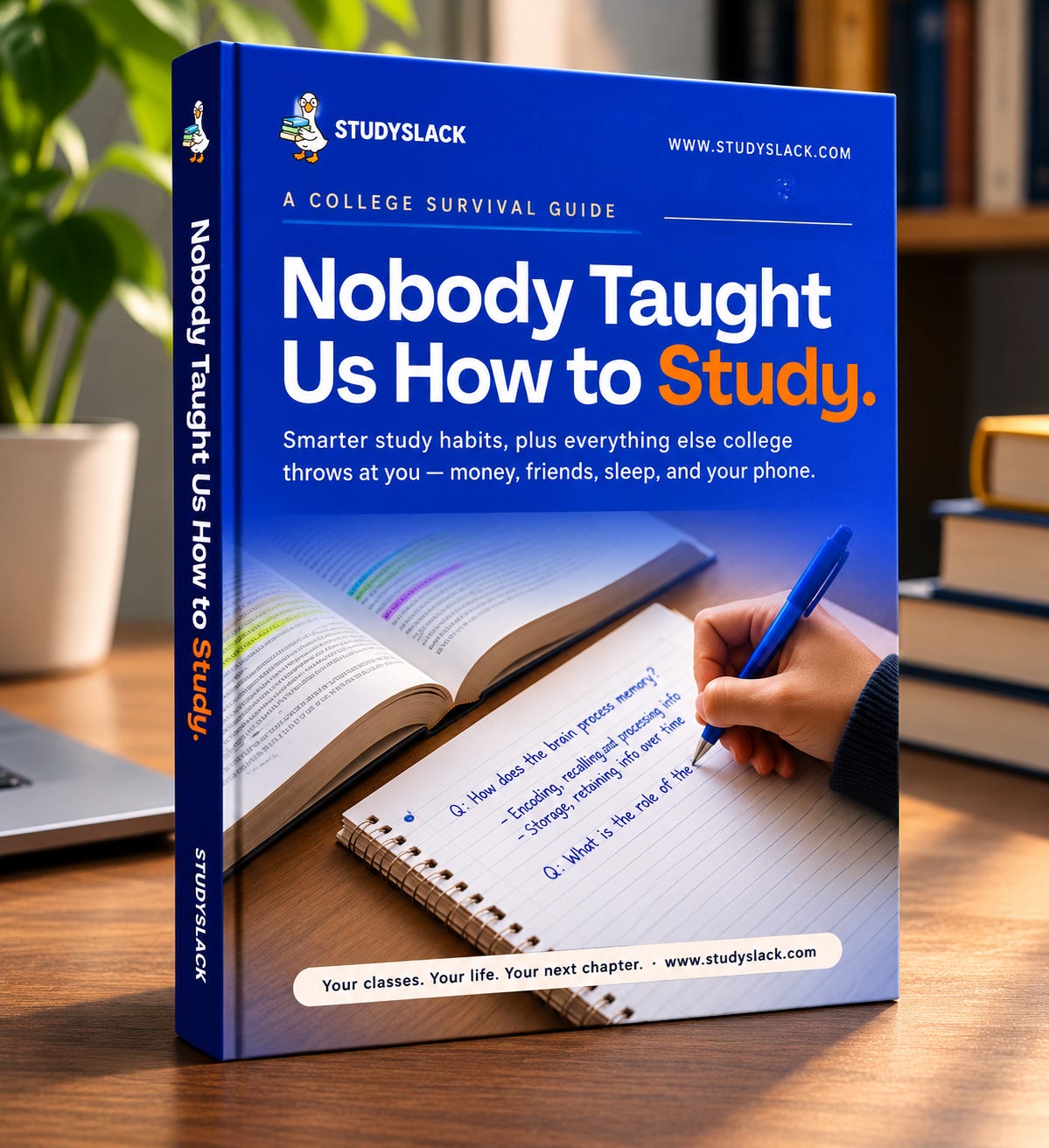
Inside, you’ll discover practical ways to study smarter, stay focused, manage your money, deal with stress, improve your sleep habits, and use AI responsibly.
StudySlack
Study smarter. Live better. Make the most of college.
Thank you this was very helpful
I always say at my table reading my notes again and again and when my exams came I forget everything and again I have to read . Tell result came like hell
I was so jealous of seeing other people succeeding doing less work and I was the one study whole day and still not able to score well.
I will try your advice and I hope it will help me
thank you this very helpful me
now i should recognized on my notes plan. This thread make me relized a long time i learn with the wrong methods and make me procrastinate 🙃. So... I should change of study plan now.